Ask a plain-English food-safety question, get the answer with the exact Food Code section cited — in seconds. Then generate a tailored compliance plan for any establishment from a short intake.
Splicewire indexes the FDA Food Code and the federal food-safety regulations, so a certified manager, instructor, or operator can stop digging through a 700-page PDF and start getting cited answers.
Request a DemoThe model code runs about 150 pages on its own — 700-plus with the annexes — and it's republished on a four-year cycle. The people who must follow it day to day are line cooks, owners, and managers, not regulatory analysts.
Most states adopt the Food Code with their own amendments. "What does the code say" depends on where you are — and there's no single place that answers the question with the section to back it up.
If you teach food safety or consult for restaurants, your scarce time goes to re-answering the same Food Code questions and re-typing near-identical plans by hand. Your expertise doesn't scale — it just gets repeated.
Ask ChatGPT a food-safety question and it will confidently cite a section that may not exist. In front of a health inspector or a client, a made-up citation isn't a convenience — it's a liability.
Real screens from a live Splicewire food-safety workspace — grounded in the FDA Food Code.
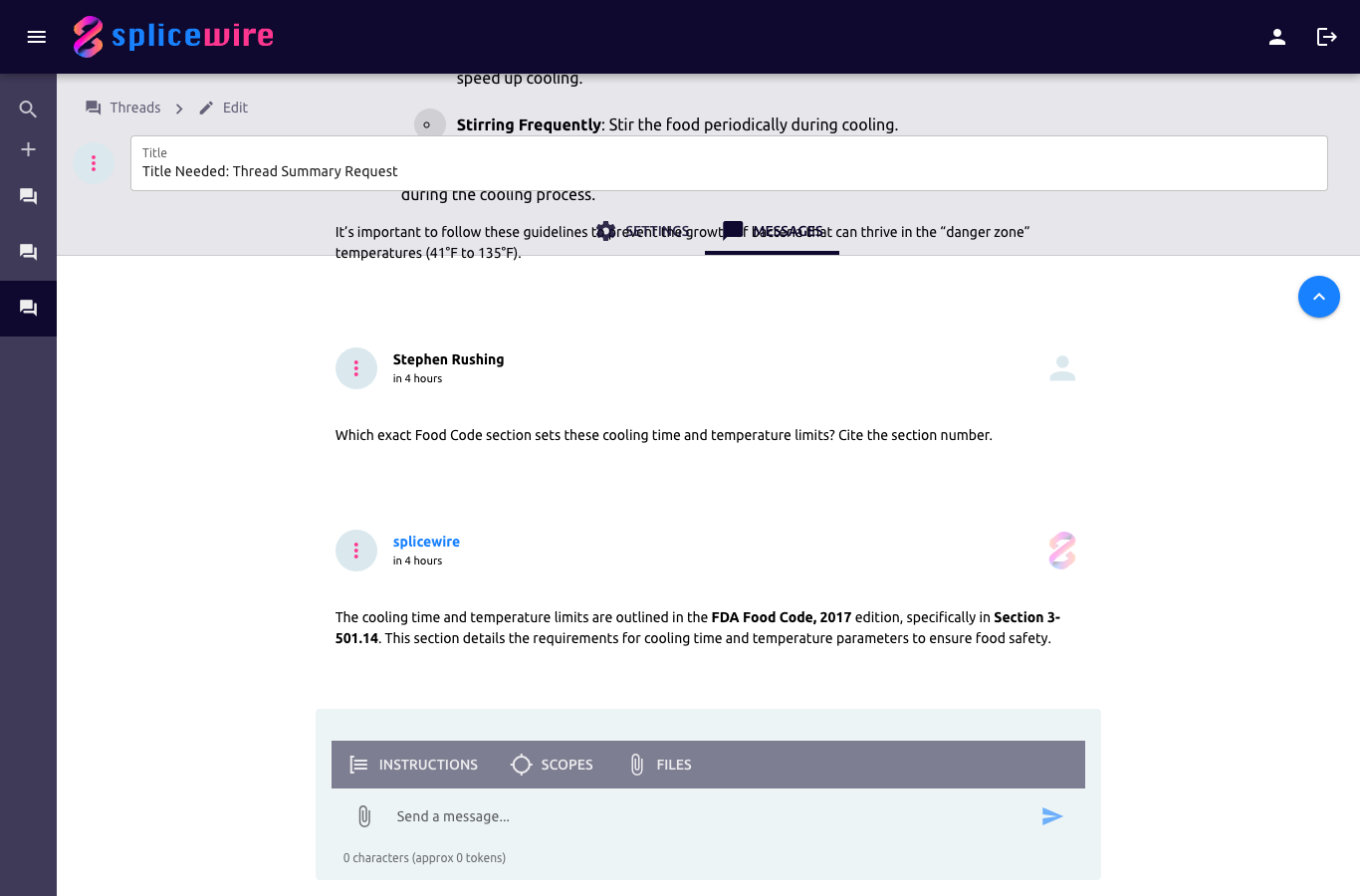
Ask in plain English. Splicewire answers from the actual Food Code text and shows you the exact section it pulled from — so you can verify it, not just trust it.
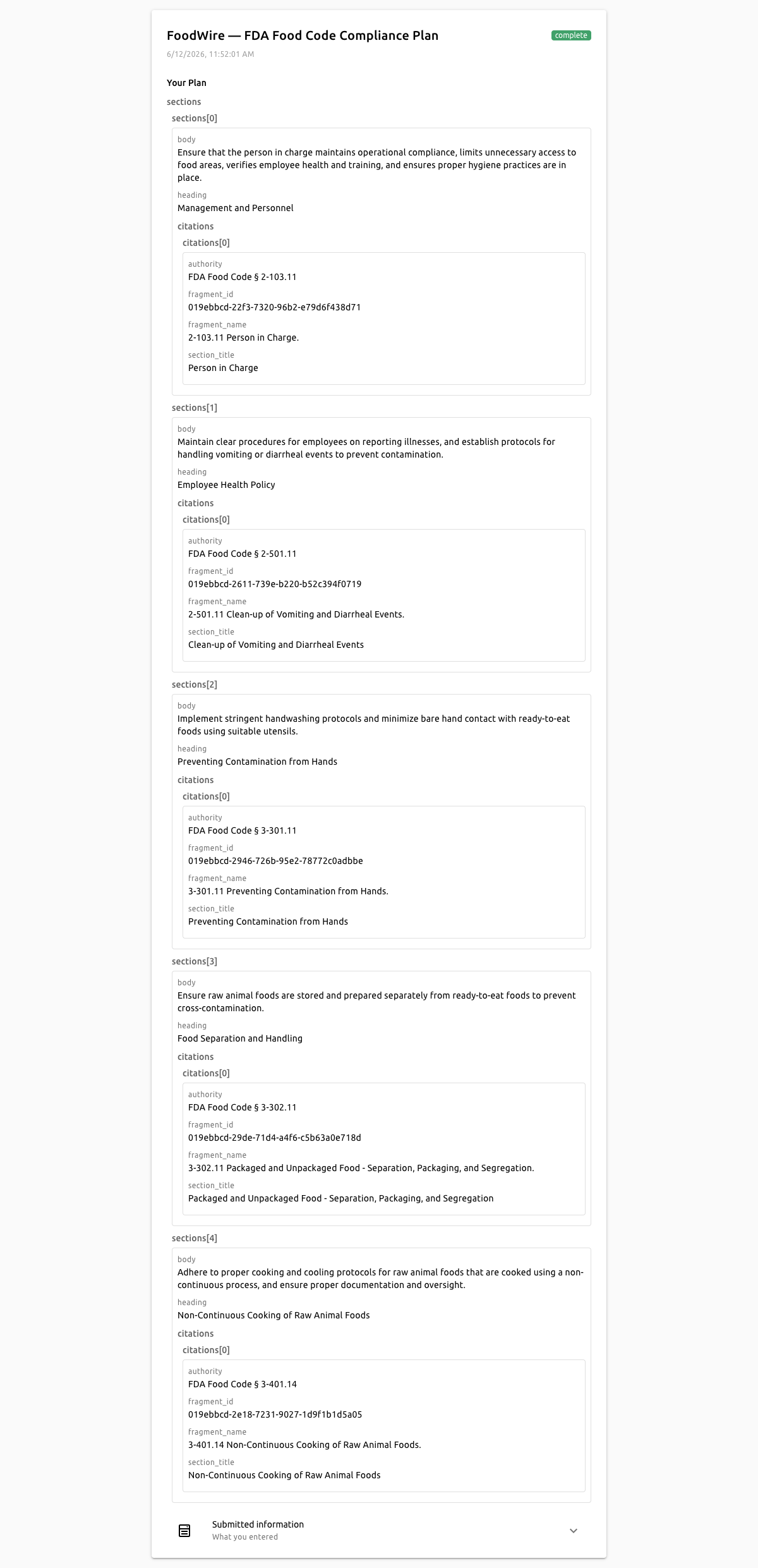
Describe the establishment — type, menu, equipment, processes — and Splicewire generates a tailored, cited food-safety plan. The deliverable a consultant produces by hand, in a fraction of the time.
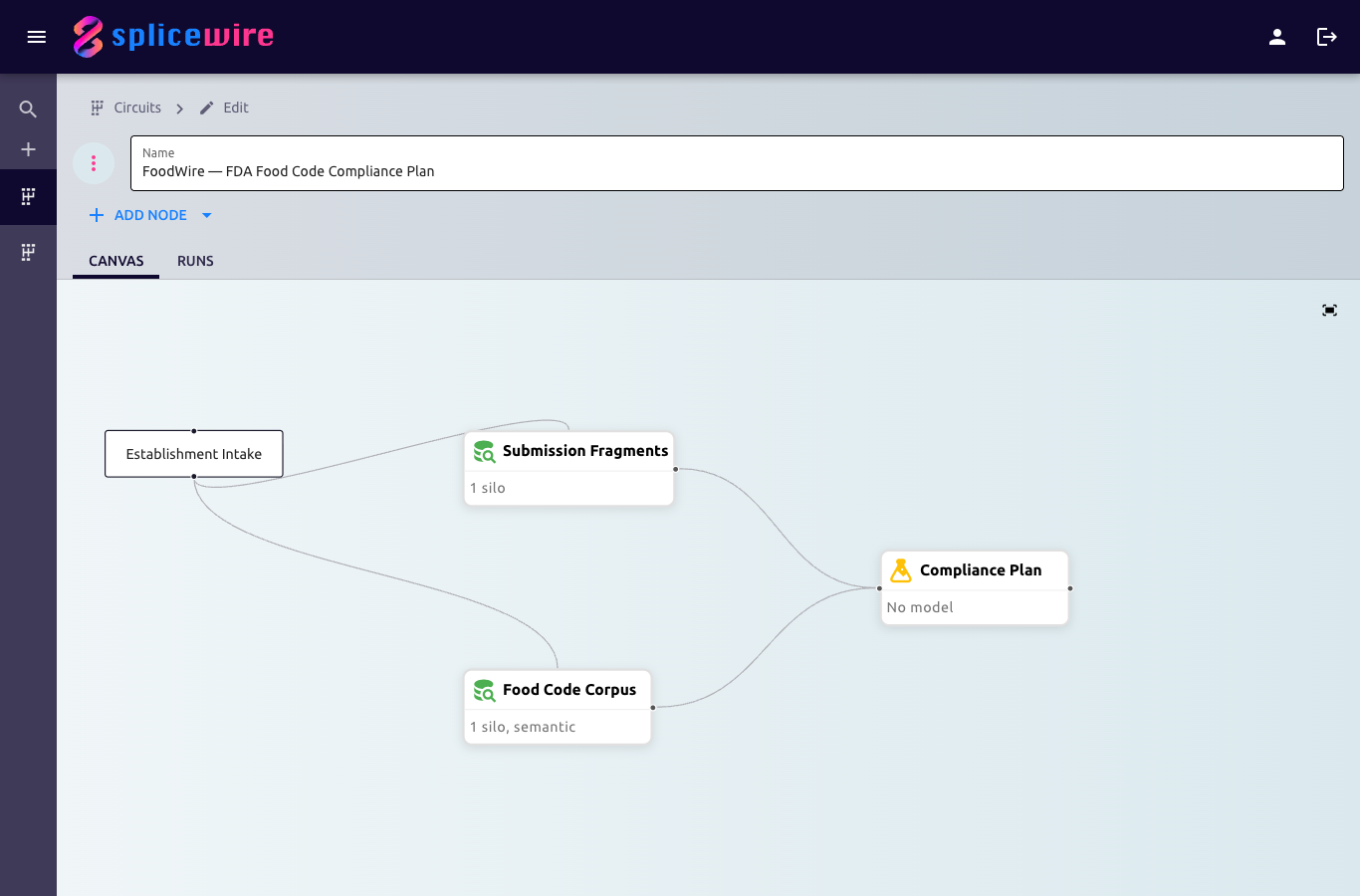
Intake, retrieval, and plan generation chain together into a repeatable automated workflow — so the same expert process runs for every client, every time.
Splicewire searches the full Food Code text — keyword and meaning combined — and returns the exact sections that answer your question, with citations you can click through and verify.
Answers come from a curated knowledge base of the actual regulatory text, not from thin air. When Splicewire cites a section, that section is real — the failure mode that makes generic AI dangerous here is the exact thing this fixes.
A short intake about an establishment becomes a tailored, cited compliance plan. The same engine an instructor or consultant can put in front of every client — turning your expertise into something you can resell.
Splicewire speaks MCP — the open standard for connecting AI to structured data. Connect it to Claude Desktop and your assistant can search the Food Code directly, grounded in real source material.
Public-domain federal sources, indexed and searchable. More added regularly.
| Source | Coverage |
|---|---|
| FDA Food Code (2022) + Annexes | The model retail food code certification is built on — the star corpus |
| 21 CFR Part 117 | Preventive Controls / CGMP / HACCP for human food |
| 9 CFR Parts 416 / 417 | Sanitation + HACCP for meat & poultry (FSIS) |
The tool a certified manager uses — complementary to certification, not a replacement for it.
You spend scarce time re-answering the same questions and re-authoring near-identical plans. Splicewire turns your expertise into leverage — a cited assistant and a plan generator you can put in front of every client.
You need repeatable, defensible compliance plans across every location. Generate establishment-specific plans from a short intake instead of rebuilding them by hand in Word each time.
When a question comes up mid-shift, you don't have time to page through the code. Ask in plain English, get the section, move on — with a citation you can stand behind in front of an inspector.
Splicewire is not a certification program and not a replacement for ServSafe or your local health department. It's the working tool a certified manager uses afterward — grounded answers and generated compliance documents over the actual adopted code. It doesn't replace your judgment; it gives you faster, verifiable access to the regulations you already answer to.