See it work.
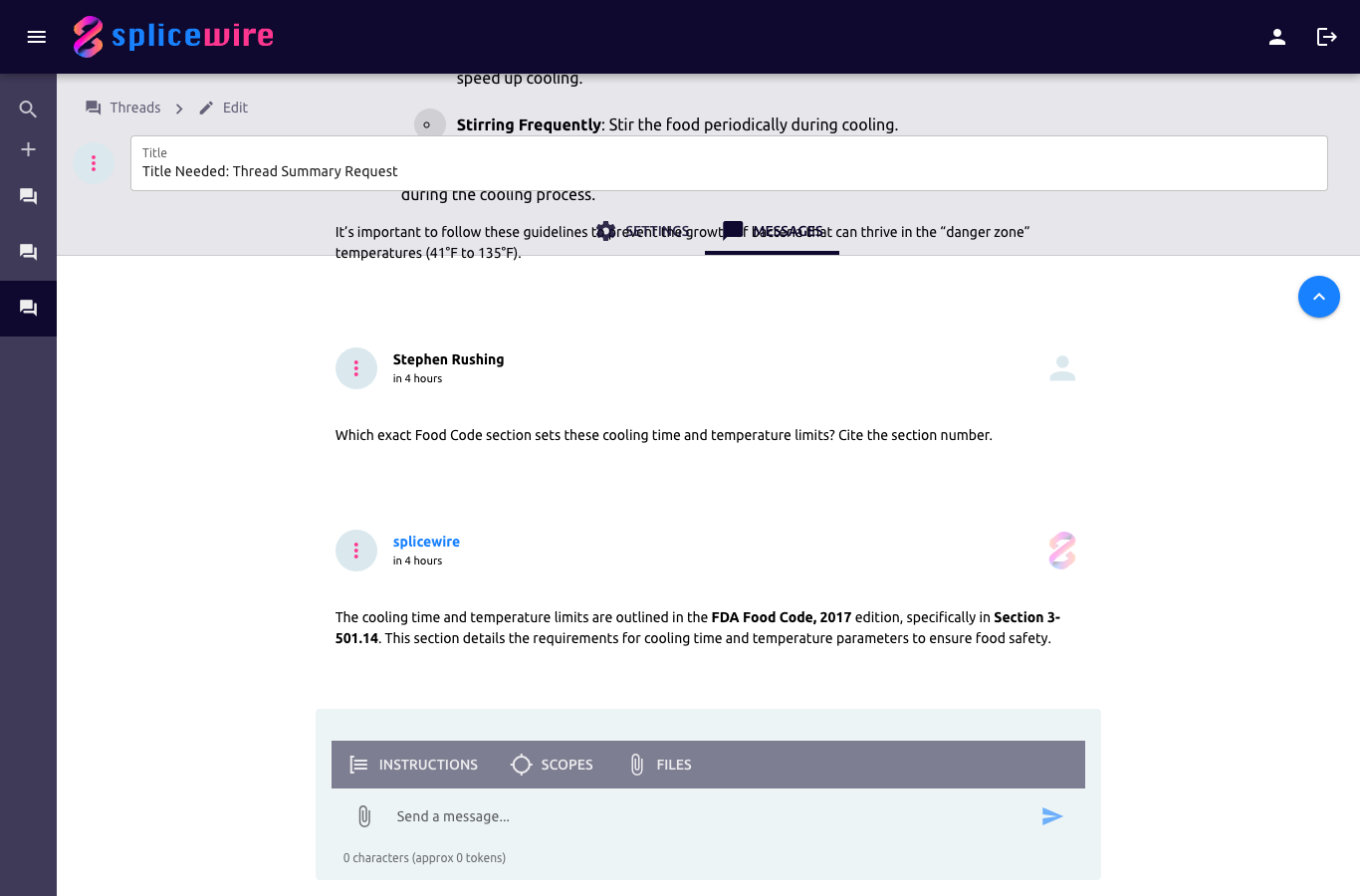
Ask in plain English; Splicewire answers from the actual primary text and shows you the exact source it pulled from — a draft your advisor reviews, with a citation to verify.
A grounded, cited assistant over primary tax, estate, and Advisers Act sources — in a private workspace your firm owns. Draft-only, human-in-the-loop, and citation-backed by design.
Splicewire indexes the regulations and IRS publications your advisors field questions about every day, so the answer comes with a citation you can trust — not a paste into generic AI that puts client data at risk.
Request a DemoInherited-IRA RMDs, estate and gift exclusions, small-business plan eligibility, the Marketing Rule — the real answers live in the Internal Revenue Code, Treasury regs, the Advisers Act, ERISA, and the IRS publications that translate them. Today you dig, rely on memory, or punt to the CPA.
Pasting a client's situation into ChatGPT is both a compliance problem and an ungrounded answer — uncited, sometimes wrong, and impossible to defend under the Marketing Rule or a records request.
The edge-case knowledge a 30-year advisor carries isn't written down anywhere a next-gen advisor can query. Onboarding is slow because the institutional knowledge is tribal.
When a founding advisor retires, decades of judgment leave with them. There's no firm-owned system that captured what they knew in a form the next generation can actually use.
Ask in plain English; Splicewire answers from the actual primary text and shows you the exact source it pulled from — a draft your advisor reviews, with a citation to verify.
Splicewire retrieves from the actual primary text — keyword and meaning combined — and returns the answer with the exact source cited. Every answer is a draft your advisor reviews and a citation they can verify.
Your firm gets an isolated workspace you can point at your own SOPs, product shelf, and documents alongside the primary regs — not someone else's data, not a shared model trained on your client information.
The succession problem is the real one. Splicewire turns a veteran advisor's institutional knowledge into a firm-owned assistant the next generation can query — not raw productivity, but continuity.
Advisor-facing, human-in-the-loop, draft-only, and grounded-with-citations. That posture is the point: it's designed to be evaluated against the Marketing Rule, books-and-records, and fiduciary duty — not to route around them.
The regulations and publications your advisors actually answer to. Plus your firm's own documents.
| Source | Coverage |
|---|---|
| 26 CFR (Treasury / IRS) | RMDs, retirement accounts, gift & estate tax |
| 17 CFR Part 275 | Investment Advisers Act — fiduciary, Marketing Rule, Form ADV, custody |
| 17 CFR Part 240 | Reg BI / broker-dealer rules |
| 29 CFR 2509–2590 | ERISA / DOL — retirement plan fiduciary rules |
Not another advisor copilot. A firm-owned, citation-grounded brain.
You've built decades of judgment into the firm. Splicewire captures it in a workspace you own — so a client edge case gets a grounded, cited answer instead of a scramble or a punt to outside counsel.
The senior advisor who mentored you is heading toward retirement. Query the firm's accumulated knowledge directly instead of waiting for the one person who remembers the answer.
Your tools are evaluated against the Marketing Rule, books-and-records, and fiduciary duty. A draft-only, cited, human-in-the-loop assistant is built to survive that review — not to create a new exposure.
Splicewire is not a meeting-notes copilot, not a CRM add-on, and not automated advice. It doesn't make recommendations or talk to clients — it gives your advisors grounded, cited answers over primary sources and your own documents, as drafts a human reviews. Keep your CRM, your planning software, and your custodian; Splicewire is the firm-owned knowledge layer underneath.